Comparison
H13 vs HEPA + Carbon Air Purifier Filter: Which Is Better?
A practical comparison of H13-focused and HEPA-plus-carbon air purifier filters for UK buyers — covering particle removal, odour reduction, cost, filter lifespan and which setup suits which home.
Quick Verdict
HEPA-only purifiers are the best starting point for allergies, dust, pollen, and pet dander. HEPA + carbon models add odour, gas, and VOC control, which helps in kitchens, near busy roads, or around pets. Choose HEPA-only for particle removal. Choose HEPA + carbon if odour or fumes matter too.
HEPA only
Strong removal of particles and allergens. Simpler filter maintenance. Best for bedrooms and allergy-led needs.
- Allergies and asthma
- Bedrooms and studies
- Dust and pollen reduction
- Buyers who do not need odour control
- Kitchens
- Homes with strong odours
- Near busy roads or paint fumes
HEPA + carbon
Combined particle and odour removal. Better for mixed air quality challenges. Carbon life can be shorter in heavy-odour environments.
- Kitchens
- Pet households
- Near-traffic or new-renovation spaces
- Mixed particle and smell issues
- Buyers who only care about particles
- Users wanting minimal filter changes
How each filter works
HEPA filters capture particles through a fine fibreglass web. They do not remove gases, smells, or VOCs. Filter replacement keeps particle capture reliable over time.
Carbon filters adsorb gas molecules and odours onto porous activated carbon. They are usually paired with HEPA so a single unit handles both particles and gases.
Particle and allergy performance
HEPA-only units often concentrate airflow and filter area on particle capture. HEPA + carbon units can perform equally well on particles if a true HEPA layer exists before the carbon stage.
Odour and VOC removal
HEPA-only units do not reduce smells. Carbon units reduce cooking odours, pet smells, smoke proximity, and VOCs from paints and cleaning products.
Room suitability
HEPA-only suits bedrooms, studies, and spaces where allergens are the main issue. HEPA + carbon suits kitchens, busy-road homes, and pet areas where smells matter.
Noise and energy
Performance depends on model design, not filter type alone. Both types can be quiet in good designs. Energy use is usually similar; meaningful differences come from motor design and CADR rather than filter media.
Filter replacement cost
HEPA elements replace in months to a few years. Carbon can saturate faster in kitchens or pet homes. Check replacement cost before buying; some cartridges are proprietary and expensive.
Pros and cons
HEPA only
Pros
- Strong particle removal
- Simpler maintenance
- Good for focused allergy needs
Cons
- No odour removal
- No gas or VOC handling
HEPA + carbon
Pros
- Combined particle and odour control
- Better in mixed environments
Cons
- Carbon saturation risk
- Often more expensive to maintain
Side-by-side comparison
| Factor | HEPA Only | HEPA + Carbon |
|---|---|---|
| Particles | Excellent | Excellent if true HEPA present |
| Odours | Poor | Good |
| VOCs | Poor | Good |
| Replacement | HEPA element | HEPA + carbon cartridge |
| Best for | Bedrooms and allergy-led needs | Kitchens and mixed air-quality issues |
Evidence note
Who should buy each
Who should choose HEPA only
- Buyers with specific particulate allergies
- Bedrooms where quiet particle capture matters
- Users who do not need odour control
Who should choose HEPA + carbon
- Homes with pets, kitchens, or strong odours
- Buyers near busy roads or new-renovation spaces
- Users wanting single-unit particle and smell control
Final verdict
Choose HEPA-only if particles and allergies are the only challenge. Choose HEPA + carbon if odour, smoke, or VOC exposure is part of the problem. Match the filter setup to the actual air quality challenge in each room.
Frequently asked questions
Frequently Asked Questions
Related Reviews

GoveeLife
GoveeLife Mini Air Purifier for Bedroom, HEPA Smart Filter Air Purifier with App Alexa Control for Pet Hair, Odors, Pollen, Smoke, Portable Air Cleaner with 3 Speeds, 2 Modes, Timer, Aroma for Home

Levoit
Levoit HEPA Air Purifier for Bedroom Home, Allergies & Pets, Quiet Sleep Mode with Aromatherapy, 3 Fan Speeds, Removes Pollen Dust Odour Smoke, Ozone Free
Levoit
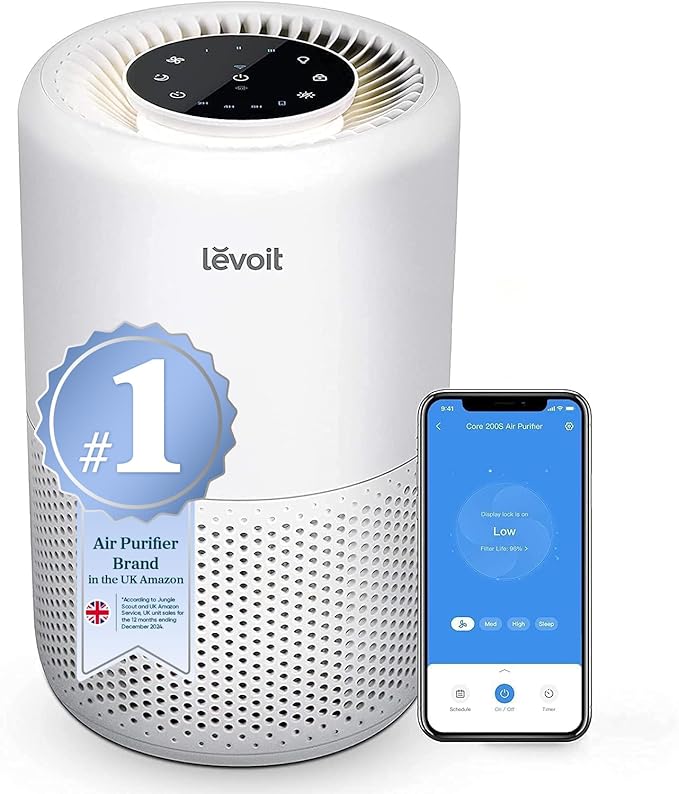
Levoit Smart HEPA Air Purifier for Allergies & Pets, 64m² Bedroom Home Coverage, Alexa & App, Ultra-Quiet Sleep Mode, Timer, Night Light, Removes 99.97% Pollen Dust Odour Smoke, Core 200S

Levoit
LEVOIT Air Purifier for Bedroom Home, Quiet HEPA Filter Cleaner with Fragrance Sponge & 3 Speed for Better Sleep, Air Frenshener, Allergies, Dust, Pet Dander, Odour, Smoke, Office, Desktop, Core Mini
Levoit
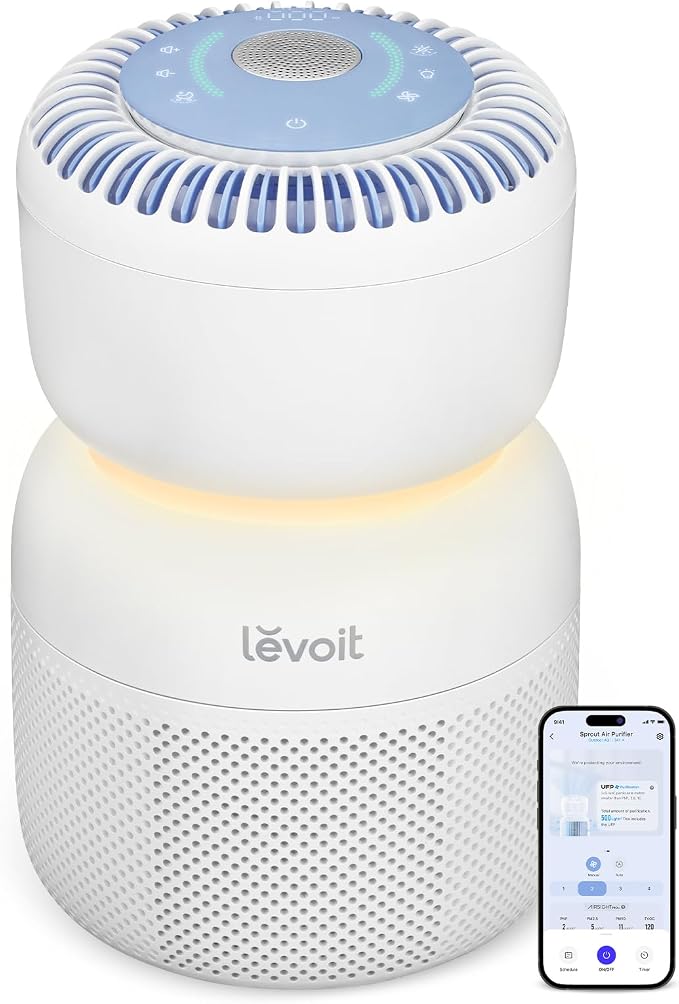
Levoit Smart Air Purifier for Bedroom Home, 5 Sensors Monitor 7 Air Quality Factors, HEPA Filter Captures 99.99% of Ultrafine Particles, Removes Odours & VOCs, Air Quality Display, App Control, Sprout

Levoit
Levoit Smart HEPA Air Purifier for Bedroom Home 108 m², CADR 258 m³/h, Laser Air Quality Sensor with Auto Sleep Mode, Alexa & App Control, Remove 99.97% Pollen/Dust/Odour, Core 300S
Recommended Reading
Buying Guide
Air Purifiers Buying Guide: What to Look For in 2026
Best Products
Best Air Purifiers in 2026
Review
GoveeLife Mini Air Purifier for Bedroom, HEPA Smart Filter Air Purifier with App Alexa Control for Pet Hair, Odors, Pollen, Smoke, Portable Air Cleaner with 3 Speeds, 2 Modes, Timer, Aroma for Home
Review
Levoit HEPA Air Purifier for Bedroom Home, Allergies & Pets, Quiet Sleep Mode with Aromatherapy, 3 Fan Speeds, Removes Pollen Dust Odour Smoke, Ozone Free
Review
Levoit Smart HEPA Air Purifier for Allergies & Pets, 64m² Bedroom Home Coverage, Alexa & App, Ultra-Quiet Sleep Mode, Timer, Night Light, Removes 99.97% Pollen Dust Odour Smoke, Core 200S
Review
LEVOIT Air Purifier for Bedroom Home, Quiet HEPA Filter Cleaner with Fragrance Sponge & 3 Speed for Better Sleep, Air Frenshener, Allergies, Dust, Pet Dander, Odour, Smoke, Office, Desktop, Core Mini
Explore